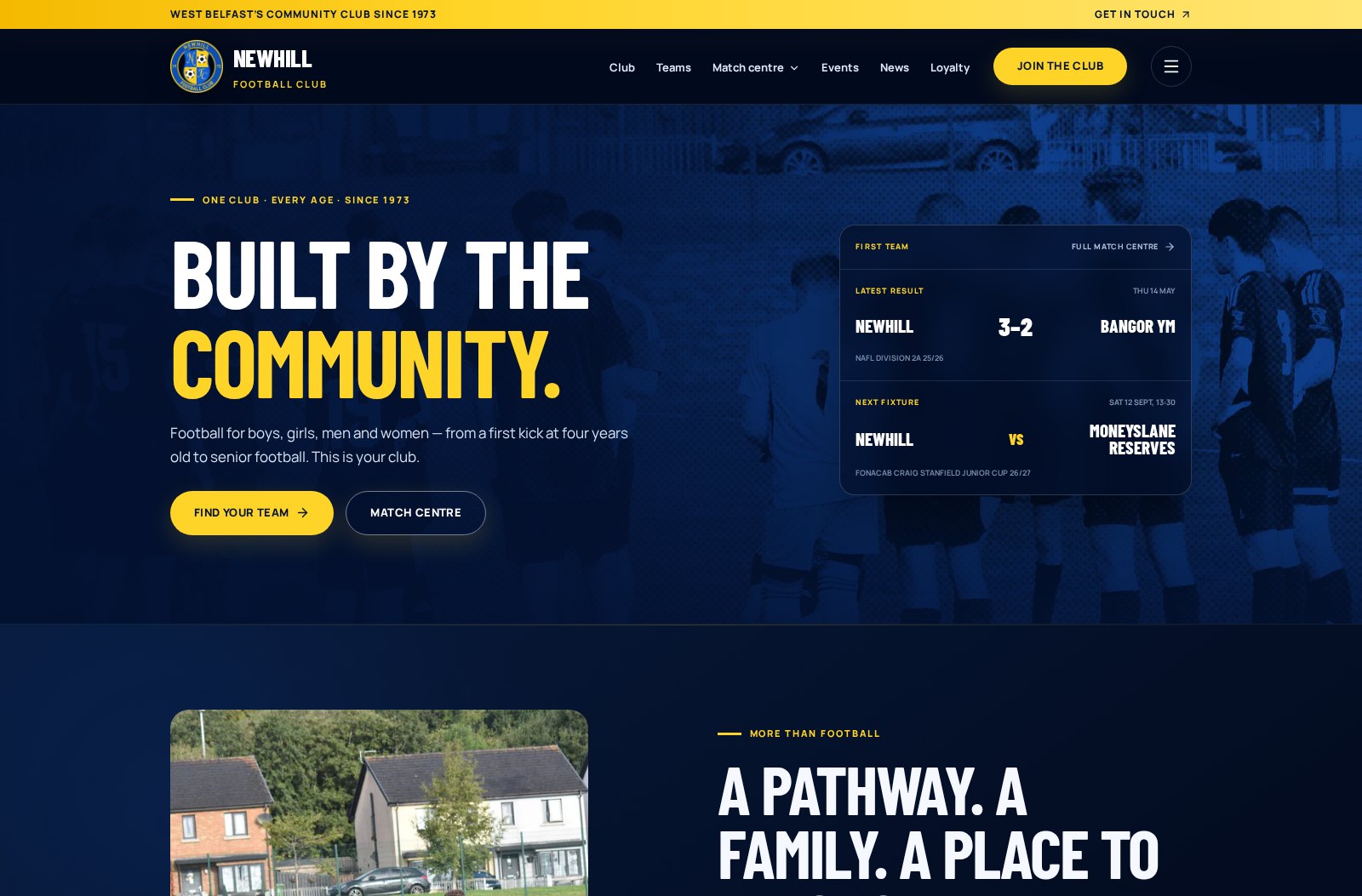
Newhill FC / second generation
Building a digital home for the whole club.
This is not a visual reskin. V2 turns the lessons of Newhill’s original website into a faster, calmer and more useful club platform—built around matchday, staff workflows and room to grow.
- Generation
- V2
- Current stage
- Club preview
- Migration principle
- Every public URL respected
The brief behind the build
Respect the history. Remove the limits. Build a proper club platform.
The original WordPress platform was a successful first phase. As the club used it, the important jobs became clearer: match information had to feel first-class, administrators needed a calmer environment, mobile navigation mattered more, and new capabilities could no longer depend on adding another layer of complexity.
V2 preserves what supporters already know while changing how the platform works underneath. The aim is continuity at the surface and far more freedom behind it.
Why a second generation
The website had become club infrastructure.
That changed the standard the next platform had to meet.
A calmer operation
Rising hosting and maintenance costs sat alongside years of accumulated WordPress and plugin complexity. Staff needed fewer moving parts and clearer tools.
Matchday first
Fixtures and results had become essential club information. They deserved a purpose-built experience rather than a supporting widget.
Mobile as the main event
Supporters, coaches and families increasingly arrive on small screens, often while moving. Navigation and information density had to respond accordingly.
History without breakage
Existing public URLs, bookmarks and search visibility needed to survive the transition instead of being traded for a cleaner build.
Room to operate
Events, notifications, content management and future integrations needed a foundation that could grow without turning every addition into another workaround.
Built from evidence
The original site served the club well. Real use revealed which journeys mattered most and gave V2 a much sharper brief.
Staged without gambling production
One controlled step at a time.
- 01
Audit and preserve
Catalogue the existing pages, posts, players, events, media, metadata and URL structure before changing the platform underneath them.
- 02
Rebuild locally
Bring the live content into a separate Astro project, recreate the information architecture and validate URL-for-URL compatibility away from production.
- 03
Establish the platform
Shape the public site, edge delivery, lightweight application data and staff-managed content as one coherent system.
- 04
Create the preview
Stage V2 on its own hostname so club stakeholders can test real journeys on real devices without replacing the current website.
- 05
Iterate with the club
Refine navigation, events, match information, administration and accessibility around staff feedback and actual club workflows.
- 06
Prepare the launch
Hold the production migration until approval, then complete the domain, indexing, metadata, analytics and monitoring work as a controlled cutover.
The centrepiece
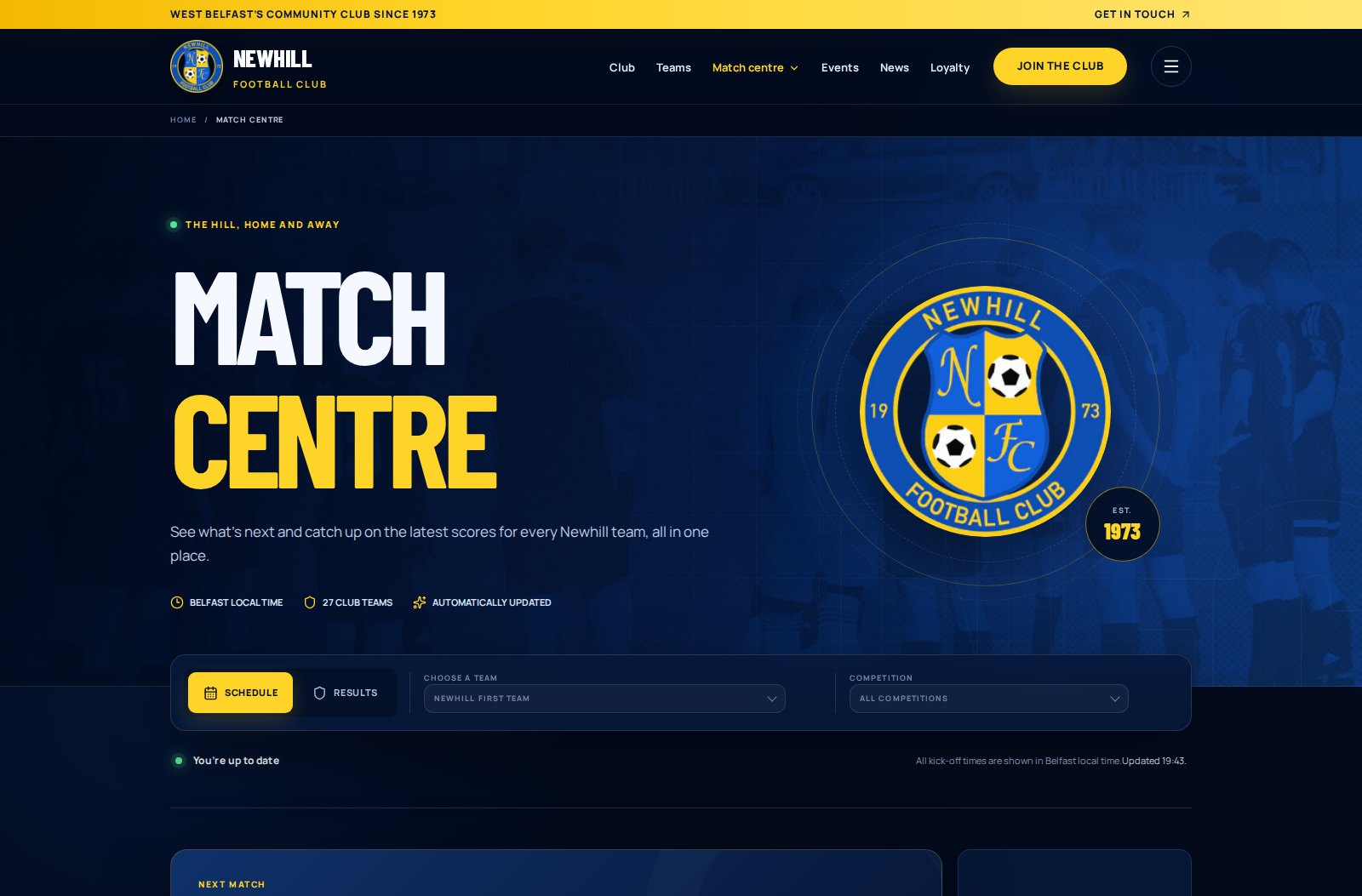
Match Centre became a product of its own.
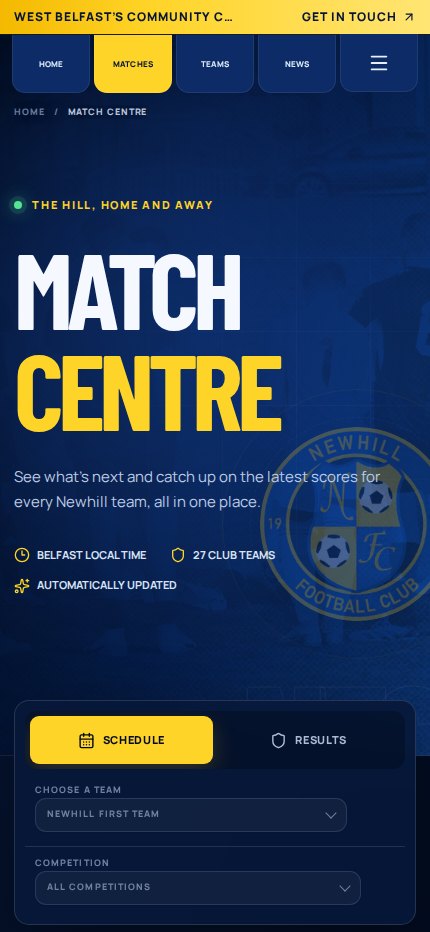
The old football-data experience proved how valuable live information was. V2 rebuilds that idea around the way supporters actually follow the club: by team, competition, result and the next useful match.
- Automatic fixtures and results from the COMET/Analyticom football data integration
- Team and competition filtering across the whole club
- Belfast-aware dates and kick-off times
- Competition identities and visual cues that aid scanning
- Cached responses and useful fallbacks around the external feed
- Considered empty states when no upcoming fixture is available
Designed from the touchline inward
Matchday rarely happens at a desk.
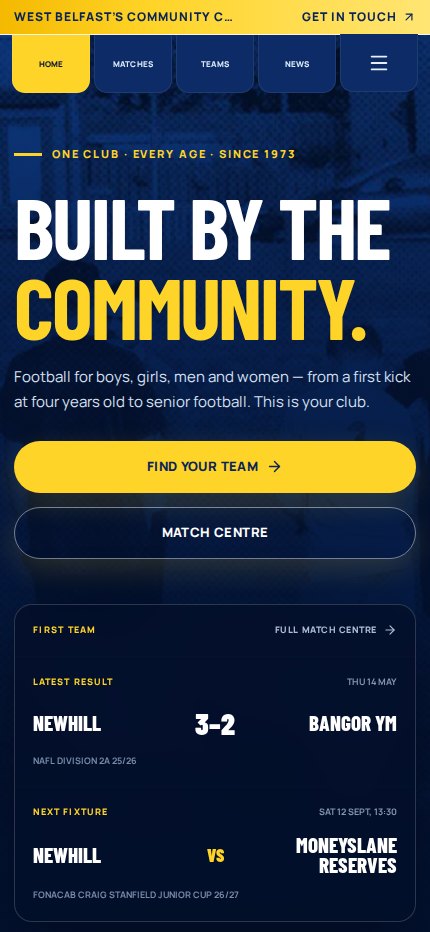
The compact hero gets the club message and latest match information into view quickly. Sticky tab navigation gives direct access to the journeys people repeat most, while the full menu holds the wider club without crowding the screen.
Transitions, interaction states and custom controls give the experience momentum, but motion always serves orientation—and steps back when a visitor asks it to.
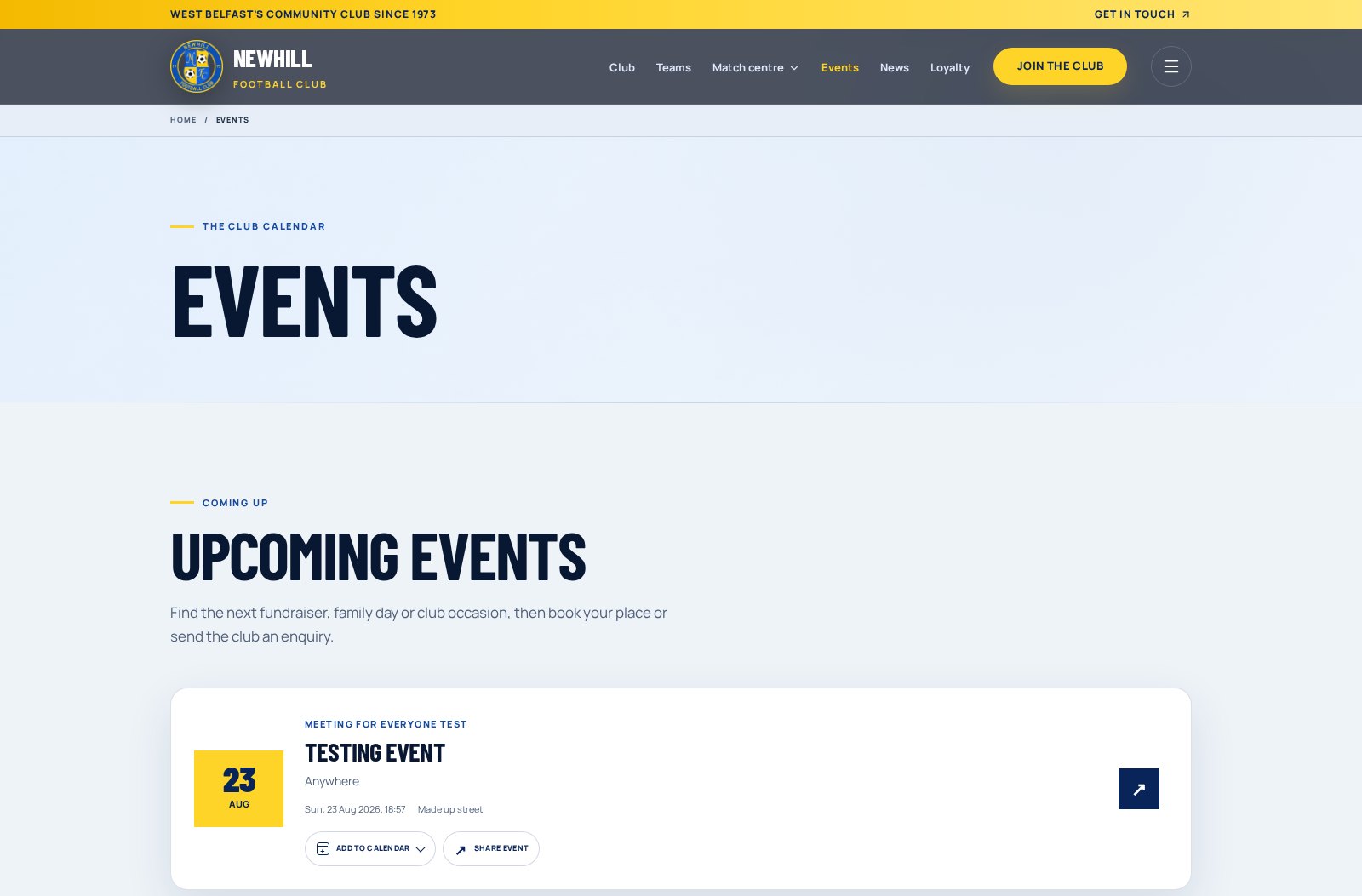
Events with somewhere to go
A club calendar that remains useful before and after the date.
Events are now club-managed content with clear upcoming and archived states, booking or enquiry pathways, native sharing and a link-copy fallback.
Supporters can save an event to Google Calendar, Outlook, Apple Calendar or another compatible calendar. When booking closes, the page still works as a useful record rather than disappearing.
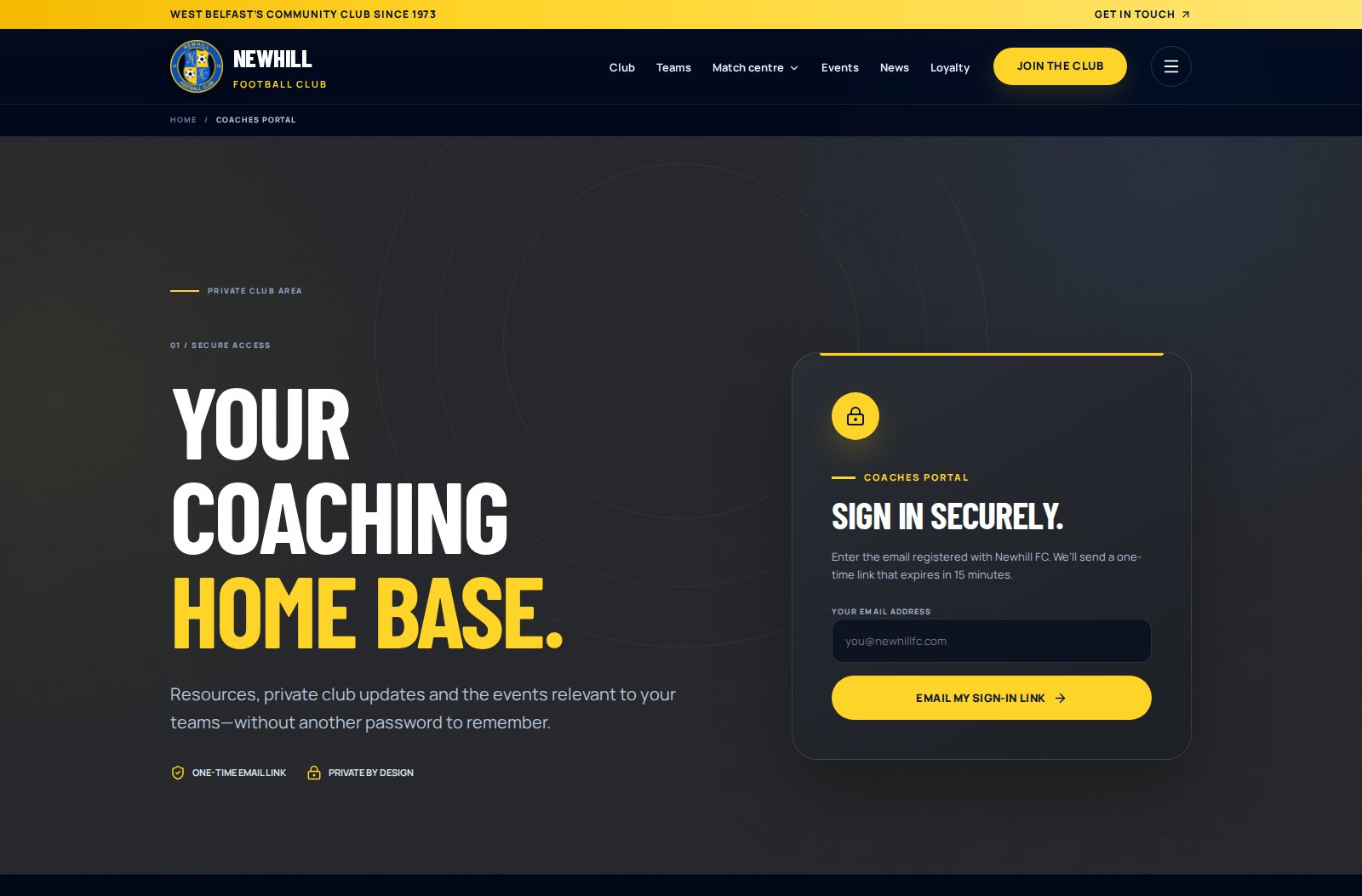
A private working layer
The coaches’ workspace is deliberately a different room.
Authorised staff enter a focused, charcoal-toned environment rather than a public website wearing an admin toolbar. It borrows the convenience people valued in WordPress without reproducing the weight around it.
Secure passwordless access for authorised staff
Role- and team-aware permissions
A filterable internal newsfeed with comments and threaded conversations
Pinned updates, timestamps, labels and audience targeting
Coach profiles, documents and shared resources
Clear save, submission, loading and notification feedback
Architecture with a reason
Lightweight in public. Capable where the club needs control.
The technical choices are intentionally ordinary at this level: each one removes friction or protects a real workflow.
Astro-first
Lightweight, crawlable pages with client-side JavaScript reserved for the moments that need it.
Cloudflare edge
Fast delivery, server-side functions and caching close to supporters without a heavy hosting stack.
Appropriate data
D1 supports lightweight application needs while third-party feeds are cached and allowed to fail gracefully.
Staff-owned content
A CMS-oriented editing layer keeps the pages, events and operational material the club needs to manage within reach.
Performance without losing personality
App-like where it helps. Still a real website everywhere else.
Pages stay lightweight, images are resized and delivered responsively, and enhanced navigation preserves genuine URLs and crawlable content. Page changes return people to the right place instead of making the interface feel slippery.
Progressive enhancement keeps essential information available when JavaScript or an integration fails. Caching reduces wait time and protects external services, while installable web-app behaviour gives coaches and supporters a more direct route back.
The useful difficult bits
The polish sits on top of migration and operational decisions.
Preserving years of URLs
The migration began with an inventory, not a redesign. Content and route mapping determined what the new architecture needed to respect.
Rebuilding the football feed
A bespoke WordPress experience had to become a platform-level product with caching, fallbacks and useful states beyond the happy path.
Designing for quiet weeks
Football data is seasonal and uneven. The interface still has to feel complete when a team has no published fixture.
Calm on a small screen
A club contains teams, results, events, news, alerts and administration. Mobile hierarchy had to make that density feel deliberate.
Two themes, one identity
Dark and light modes needed to remain recognisably Newhill while meeting the same contrast and interaction standards.
Volunteer-friendly tools
The operational layer had to feel clear to people with different levels of technical confidence, without recreating WordPress complexity.
What happens at launch
Approval first. Cutover second.
V2 remains staged alongside the current website while the club tests it. Production only moves after stakeholder approval, final route checks, indexing controls, metadata, analytics and monitoring are ready together.
That discipline matters: the rebuild is designed to preserve Newhill’s digital history, not simply replace the technology that carries it.
The goal was never to make Newhill look like a bigger club. It was to build a digital platform worthy of the club it already is.
Build the next chapter